
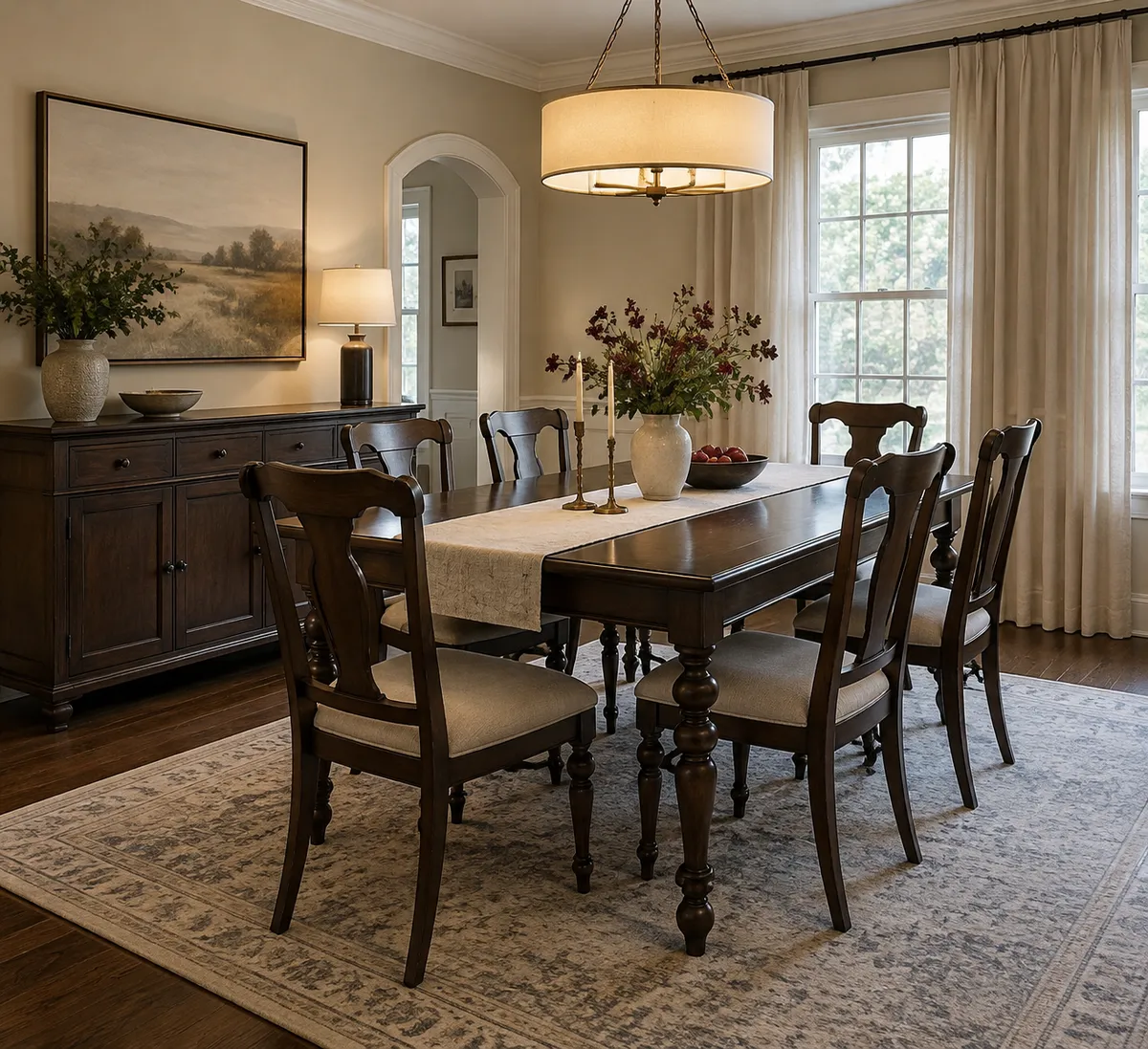
A dining room makeover featured by Apartment Therapy shows what one well-chosen DIY can do. The furniture looked dated, and a single update changed how the whole room felt. You don't need a new table and chairs to get that result. You need to pick the right change and aim it at the right room.
Here is how to use the same idea in your own home, including how to decide which one change to make.
Why This Dining Room Needed to Work Hard
Per Apartment Therapy, this dining room is visible from almost every point on the first floor, so the design had to pack a punch. That detail matters more than it seems.
In an open layout, a dining room is never just a dining room. It's part of the view from the kitchen, the living area, and the entryway. Dated furniture there doesn't hide in a corner. It sets the tone for everything around it.
The flip side is encouraging. If one room is seen from everywhere, one smart update there pays off everywhere.
Why One Change Beats a Full Overhaul
Apartment Therapy's story centers on a single DIY transforming furniture that looked dated. The outlet's framing points to a useful principle: you often don't have a furniture problem, you have a surface problem.
Shape and size usually hold up fine. What reads as old is typically the finish, the color, or the upholstery. Changing that one element can modernize the piece without the cost of replacing it.
The three most common single updates are:
- Paint: Best for pieces with solid construction but a tired color or worn finish.
- Stain: Best for wood you want to keep looking like wood, just in a fresher tone.
- Upholstery: Best when chairs have good frames but faded or outdated seat fabric.
I can't tell you which one the homeowners chose, since the details of their project aren't something I can verify here. The approach works regardless of which you pick.
How to Pick Your One Change
Stand where you see the dining room most often and look at it for a full minute. Then ask which element your eye lands on first.
If the table is the biggest visual mass
Start there. A table anchors the room, so a new paint color or stain will shift the whole look fastest.
If the chairs feel tired
Chairs repeat around the table, so they add up visually. New seat fabric on four to six chairs can change the room more than you'd expect, and it's often the most forgiving DIY to learn on.
If everything is the same wood tone
Change one piece, not all of them. Updating just the table or just the chairs breaks up a matched set that can make a room feel stuck in one era.
Doing the Update Well
The specific steps vary by material, but a few habits apply to nearly any furniture makeover.
- Clean first. Dining furniture collects grease and residue. Paint and stain won't hold well over it.
- Test in a hidden spot. Try your color on the underside of the table or a chair leg before committing.
- Work in thin coats. Two light coats look better than one heavy one and dry more evenly.
- Give it time to cure. Dining pieces get heavy daily use, so let the finish harden before you load it with plates.
- Finish with a protective topcoat on any surface that will see spills and elbows.
Treat these as general good practice rather than the steps used in the featured project.
Styling a Dining Room You See From Everywhere
Since this kind of room is visible from so many spots, think about it from several angles, not just from a seat at the table.
- Check the sightlines. Walk to the kitchen, the sofa, and the front door and look back. Fix whatever bothers you from the most spots.
- Keep the palette connected. Pull one color from the adjoining rooms into the dining area so it feels like part of the same home.
- Make the table look finished. A runner, a bowl, or a simple centerpiece gives the view a focal point even when nobody is eating.
- Edit before you add. Clear extra clutter from nearby surfaces so the updated furniture is the star.
What to Expect From a Budget Refresh
Projects like this appeal because they make design feel achievable. You spend on materials and a weekend, not on a full furniture set. The tradeoff is time and patience, since prep work is where results are won or lost.
If a piece is wobbly, cracked, or uncomfortable, a new finish won't fix it. Cosmetic updates work on furniture that is sound but dull.
Your Next Step
This week, stand at the far end of your first floor, look at your dining room, and name the one element that looks oldest. That's your project. Change only that, and see how much the room shifts before you touch anything else.


